Traditional Methods, Proven Results
Growing potatoes the right way takes a full year of planning, preparation, and patience. Every step at Caladruo is shaped by the rhythms of the Irish seasons and the lessons of generations past.
Our farming calendar follows a natural cycle. Each season brings its own tasks, from the quiet preparation of winter through to the busy harvests of autumn. Below is the full journey of a Caladruo potato.
Planning & Chitting
Soil Prep & Planting
Growing & Tending
Harvest & Storage
Eight careful stages take each potato from a seed in our hands to a fresh sack on your table. Nothing is rushed, nothing is left to chance.
The year begins in the quiet of January. Seamus and the team sort through our seed potato stock, selecting only tubers that are firm, blemish-free, and true to variety. Each seed potato is placed in open trays and moved into our chitting shed, a frost-free space with plenty of natural light. Over the next eight to ten weeks, each seed develops strong, stubby sprouts called "chits." These give the plant a head start once it goes into the ground.
We source certified seed from Donegal for some varieties and save our own for heritage types like British Queen. Keeping our own seed stock requires careful isolation during the growing season and rigorous health checks each winter. This process demands attention but ensures we preserve the genetic integrity that gives each variety its distinctive flavour.


Once the ground has dried enough after winter rain, we begin preparing the fields. Our 45 acres follow a strict four-year rotation: potatoes are grown in a field only once every four years, with barley, grass ley, and root vegetables filling the gaps. This rotation breaks disease cycles, restores soil structure, and builds organic matter naturally.
The designated potato fields are ploughed to a depth of about 25 centimetres, turning under the previous season's grass ley. We then harrow the surface to break clods and create a fine tilth. Composted farmyard manure, collected and turned over the winter months, is spread evenly and worked into the top layer. Each field is soil-tested for pH and key nutrients. Where lime is needed to bring the pH into the 5.5-6.0 range ideal for potatoes, it is applied and incorporated during harrowing.
Planting usually begins in the last week of March, though we wait for the soil temperature to reach at least 7 degrees Celsius. Putting seed potatoes into cold, waterlogged ground invites rot and poor emergence, so patience pays off. Our earliest variety, Queens, goes in first, followed by Roosters and the heritage types in early April.
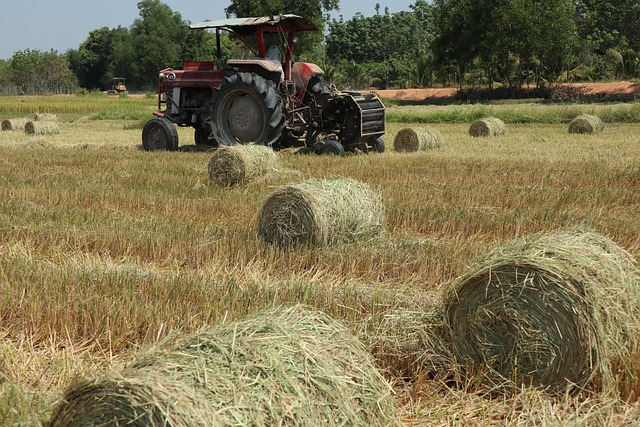
We use a two-row planter mounted behind our Massey Ferguson tractor. The machine opens a drill about 12 centimetres deep, places each chitted seed at 30-centimetre intervals, and covers it with a ridge of soil. Rows are spaced 75 centimetres apart to give each plant room to spread. After planting, each section is marked with variety labels and a planting date, so we can track maturity and schedule harvest precisely. Each variety occupies its own block of the farm to prevent accidental mixing.
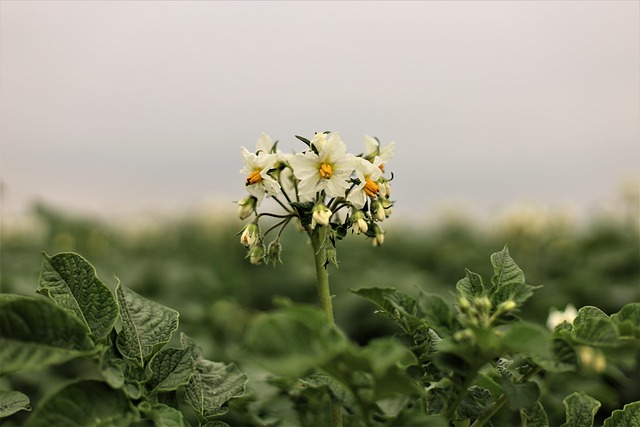
About three to four weeks after planting, the first green shoots push through the soil surface. This is when earthing up begins. Using a ridging plough attachment, we draw soil from between the rows up onto the drills, covering the young stems partway. We repeat this process two or three times as the plants grow, building the characteristic ridged rows that define a potato field.
Earthing up serves several purposes. It protects developing tubers from sunlight, which would turn them green and produce solanine, a naturally occurring toxin. It also smothers weeds between the rows without the need for herbicide, improves drainage around the roots, and gives the tubers more room to form. The process requires careful timing because the ridges must be built before the plants grow too tall and risk being damaged by the plough.
The growing season is the busiest time on the farm. Seamus walks the rows every morning from May onward, inspecting leaves for the earliest signs of blight, checking for aphid colonies, and feeling the soil moisture by hand. Late blight, caused by the organism Phytophthora infestans, is the single greatest threat to Irish potato crops. Cork's damp, mild climate makes conditions favourable for the disease, so vigilance is constant.
We monitor Met Eireann weather data and the Department of Agriculture's blight warnings throughout the summer. When blight pressure is high, we apply approved copper-based sprays on a protective schedule. Between sprays, we rely on healthy soil biology, good air circulation from proper row spacing, and the natural resistance of our chosen varieties. We avoid synthetic pesticides wherever possible, preferring an integrated approach that balances prevention with minimal intervention. Soil moisture is rarely a problem in Cork, though during rare dry spells in June or July, we irrigate using water drawn from a spring-fed reservoir on the upper part of the farm.
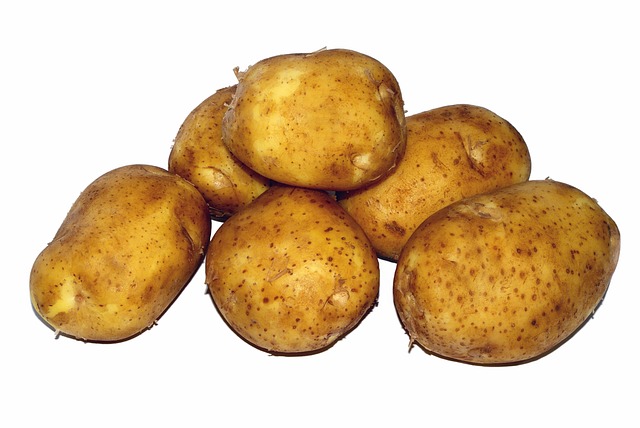
Harvest season at Caladruo runs from mid-July through to late November, depending on the variety. Queens come first, lifted while their skins are still delicate and their flesh sweet from recent growth. Roosters follow in September, and the later heritage varieties like Kerr's Pink and British Queen are dug in October and November once their skins have set and hardened.
We use a single-row mechanical digger that lifts the ridge and separates the tubers from the soil. Behind the machine, our team of four to six pickers works the row by hand, gathering potatoes into crates and sorting out any damaged or green tubers on the spot. Hand-picking is slower than fully mechanised systems, but it prevents the bruising and cutting that degrades quality. Each crate is labelled with variety, field number, and date. On a good day, the team can harvest about two acres, filling roughly three tonnes of crates.
Freshly harvested potatoes are not ready for sale straight away. They need a curing period during which small skin wounds heal and the outer skin toughens. We move crates from the field into our stone barn, where conditions stay naturally cool and dark. The barn has ventilation panels that we adjust to maintain a temperature between 12 and 15 degrees Celsius during the curing phase, which lasts about two weeks.
After curing, the temperature is gradually lowered to 4 to 6 degrees for long-term storage. Our barn is insulated with straw bale walls that buffer temperature swings without the need for mechanical refrigeration. Humidity is kept high, around 90 percent, by the natural stone and earthen floor. These conditions prevent shrivelling, control sprouting, and preserve the flavour compounds that make fresh-from-the-farm potatoes taste so different from cold-stored supermarket stock. We store enough to supply our customers from harvest through to the following April.

When an order comes in, we pull crates from storage and grade the potatoes by hand. Each tuber is sorted by size into three categories: small (under 50mm, ideal for salads and boiling), medium (50-75mm, the standard cooking potato), and large (over 75mm, perfect for baking and roasting). Any potato showing signs of damage, greening, or sprouting is removed and composted.
Graded potatoes are packed into our brown paper sacks, printed with the Caladruo name, variety, weight, and planting field. We offer 2kg bags for home customers and 10kg or 25kg sacks for restaurants and shops. Deliveries within the greater Cork area are made by our own van on Wednesdays and Fridays. We also attend the Midleton Farmers' Market every Saturday morning and the Mahon Point Market on Thursdays. For customers further afield in Munster, we work with a local courier to deliver within 48 hours of dispatch.
Modern farming often prioritises speed and volume. At Caladruo, we believe the old ways produce better food, healthier soil, and a farm that will still be productive for the next generation.
Our strict four-year rotation prevents soil exhaustion and breaks disease cycles naturally. Each field grows potatoes only once in four years, with barley, grass ley, and root vegetables filling the gap. The result is living, fertile soil that produces healthier plants without heavy fertiliser inputs.
We feed our soil with composted farmyard manure rather than synthetic nitrogen. The compost is built from a mix of cattle bedding, vegetable waste, and grass clippings, turned and aged for at least six months before application. This slow-release organic matter sustains soil biology and provides balanced nutrition throughout the growing season.
Mechanical harvesters are efficient, but they bruise potatoes and mix varieties. Our team picks by hand behind a single-row digger, selecting only sound tubers and leaving damaged ones in the field. This care means our potatoes arrive at your kitchen in the best possible condition, with longer shelf life and better flavour.
Varieties like British Queen and Kerr's Pink are disappearing from Irish farms because they yield less than modern breeds. We grow them because their flavour and cultural significance are worth preserving. By saving our own seed and maintaining isolated growing blocks, we keep these genetic lines alive for future growers.
Our spring-fed reservoir provides irrigation during dry spells without drawing from the public water supply. The farm's hedgerows and grass margins filter runoff before it reaches local streams, protecting water quality in the Bandon River catchment. Healthy soil also holds more water, reducing the need for supplemental irrigation.
Every potato we sell travels less than 80 kilometres from field to customer. Our direct delivery model cuts out middlemen, keeps food miles low, and ensures potatoes reach your kitchen within days of leaving storage. By selling locally, we support the regional food economy and build real relationships with the people who eat our food.
Some figures that give a sense of the scale and care behind our operation.
Acres Farmed
Across 6 rotated fields
Potato Varieties
Including 3 heritage types
Tonnes Per Year
Harvested across all varieties
Hours to Table
Maximum time from order to delivery
We follow organic principles in most of our practices: composted manure for fertility, crop rotation, minimal synthetic inputs, and hand harvesting. However, we are not currently certified organic by an Irish certification body. The occasional use of approved copper-based blight sprays during high-pressure seasons means we cannot claim full organic status. We are transparent about our methods and happy to discuss them with any customer who wants to know exactly how their food was grown.
Yes, we welcome visitors by appointment. Farm walks run on selected Saturday mornings during the growing season, typically May through September. Seamus leads each walk personally, covering the full process from soil preparation to harvest. Groups of up to 12 people are accommodated. Please contact us to arrange a visit. We ask that visitors wear sturdy footwear, as farm paths can be muddy.
Blight prevention starts long before any spray is applied. Our four-year rotation ensures blight spores do not accumulate in the soil. We select varieties with good natural resistance, maintain proper row spacing for air circulation, and monitor Met Eireann's blight forecasts daily from June onward. When conditions are genuinely favourable for blight, we apply copper-based fungicides approved for use in Ireland. We keep detailed spray records and use the minimum number of applications necessary to protect the crop.
Large-scale potato harvesters are fast, but they handle tubers roughly. Potatoes that are dropped, bumped, or squeezed develop internal bruising that reduces shelf life and creates brown marks when cooked. Our approach uses a mechanical digger to lift the ridge, then human hands to gather the tubers gently into crates. This means every potato is inspected as it is picked, damaged or green ones are removed immediately, and the final product arrives in excellent condition. It costs more in labour, but the quality difference is noticeable.
Stored properly in a cool, dark, well-ventilated place, our maincrop varieties (Rooster, Kerr's Pink, British Queen) will keep for three to four weeks after purchase. Early varieties like Queens are best eaten within a week or two, as their skin is thinner and they are harvested before full maturity. Avoid storing potatoes in the fridge, near onions, or in plastic bags, as these conditions encourage sprouting and moisture build-up.

Caladruo is not a museum farm. We use modern equipment where it makes sense, paired with hand labour where quality demands it. Our fleet is modest but well-maintained, chosen for reliability and suitability to our 45-acre scale.
Our workhorse tractor for ploughing, harrowing, earthing up, and pulling the digger at harvest time.
Places seed potatoes at precise intervals and covers them in a single pass, reducing planting time.
Lifts the ridge gently and deposits tubers on the surface for hand-picking. Slower but kinder to the crop.
Delivers fresh potatoes to restaurants, shops, and market stalls across the greater Cork area twice weekly.
Book a farm walk or get in touch to discuss wholesale supply. We are always happy to show visitors how we grow our potatoes.
We use cookies for analytics and personalisation. See our Privacy Policy for details.